
Review | InterChamber C-Level Breakfast | Two Sessions Briefing: First Strategic Insights on China's 15th Five-Year Plan
Shanghai, March 12, 2026: In the wake of China’s pivotal 2026 Two Sessions and the shaping of the 15th Five-Year Plan (2026-2030), foreign enterprises face a critical juncture. As the nation pivots from quantity to "quality" and embraces themes like "AI+" and "anti-involution," navigating the new policy landscape is no longer optional—it is existential for C-suite leaders.
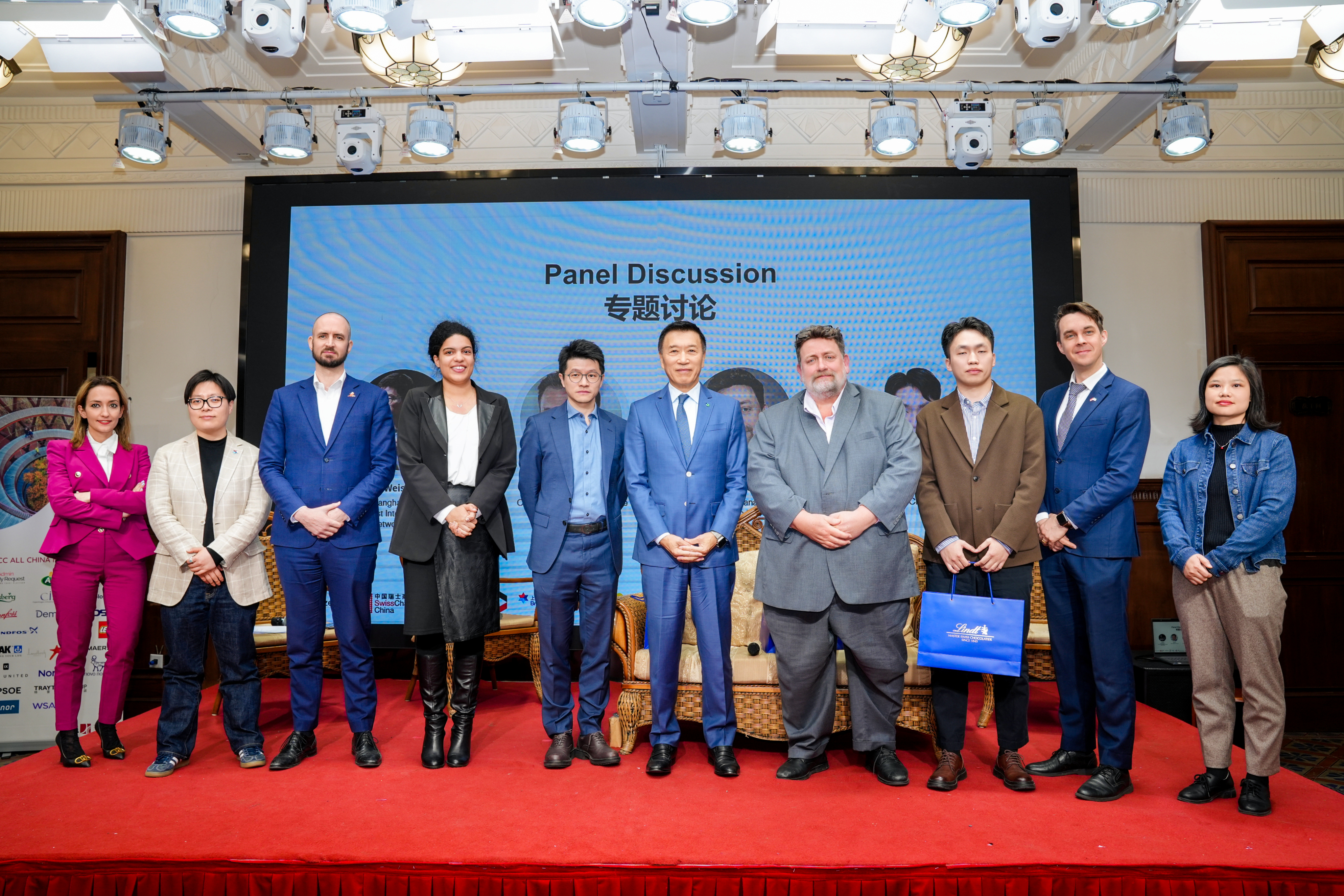
To address this urgent need, SwissCham China East has convened a high-level Interchamber Breakfast, co-organized with AustCham Shanghai, Benelux Chamber Shanghai, BritCham Shanghai, China-Italy Chamber of Commerce, Danish Chamber of Commerce, and FinnCham China. The event, held this morning in Shanghai, brought together CEOs, Managing Directors, and senior executives to decode the implications of the two sessions on the Foreign Invested enterprises.
Decoding the "Two-Speed" Reality
The session opened with a stark assessment of China's current economic climate. Weisi Xie, Director of the Economist Intelligence Corporate Network, presented data highlighting a "two-speed" reality: robust headline GDP growth sits atop subdued household sentiment and persistent deflationary pressures. With the 2026 GDP growth target set conservatively at 4.5-5%, Mr. Xie emphasized that the government is prioritizing structural reforms over aggressive stimulus.
On the question regarding the search for the next growth driver Mr. Xie stated: "While the triumphant tech progress is set to become the new growth driver during China’s next phase of development, we should not forget about the traditional manufacturing sector, which continues to strengthen the country’s dominance in global industrial supply chain, and will remain a significant growth pillar for China over the next decade."
Strategic Realignment: From KPIs to Localization
A central theme of the discussion was the recalibration of business Key Performance Indicators (KPIs) to align with national trajectories. Alvin Liu, China President at Fortescue, shared insights from the heavy industry sector, illustrating how his company is translating the national mandate for "New Quality Productive Forces" into operational metrics.
“Fortescue's Real Zero commitment will see us eliminate fossil fuels from our terrestrial Australian mining operations by 2030,” Mr. Liu explained. “China has emerged has the global leader on green transition technologies. So to deliver this agenda, we are cooperating closely with our strategic Chinese partners to develop and supply the solar panels, wind turbines, batteries, energy storage, transmission and electric mobilitiy technologies we need to decarbonise our operations.”
Mr. Liu emphasised these relationships are partnerships in the truest sense of the word. “Fortescue staff are working alongside local partners to develop technology and solutions tailored to the unique requirements of our operating environment in Western Australia. We approach these relationships by building trust and pursuing mutually beneficial outcomes, rather than on a purely transactional basis. By leveraging China’s advantages in scale and innovation on green transition technologies, we can rapidly transform our operations and pave the way for the decarbonisation of our industry.”
The Compliance Imperative and Fair Competition
As China refines its market governance, legal and compliance factors are moving to the forefront of the executive agenda. Philippe Snel, Managing Director at Da Wo Law Firm, addressed the concept of "fair competition" and "equal treatment" for Foreign Invested Enterprises (FIEs). He said: “The 15th Five-Year Plan's explicit recognition of private enterprises – including foreign invested enterprises - as engines of innovation and economic development is remarkable and points to an important policy shift. It provides a strong political and legal incentive for foreign and private companies to advocate more vocally for equal treatment and to engage with regulators on specific discriminatory practices."
Key policy roundup
During the discussion Zheng Zhou, Consultant at China Macro Group, highlighted five key policies to observe and stated “The New-quality productive forces” showcases China’s next-level industrial ambition into the 15th FYP, including to largely industrialize six key emerging sectors, while securing the early lead in future technologies through early exploration and early application like fast adoption of AI. China is emerging as a tech winner, and definitely wants to solidify that position into a longer term."
About the Organizers:
SwissCham China East, in collaboration with AustCham Shanghai, Benelux Chamber Shanghai, BritCham Shanghai, China-Italy Chamber of Commerce, Danish Chamber of Commerce, and FinnCham China, represents a broad business community of international businesses operating in East China. These chambers are dedicated to fostering dialogue between foreign industry leaders and policymakers to ensure a sustainable and competitive business environment.