

Top 10 Cloud Providers in China 2026: A Practical Guide for International Companies
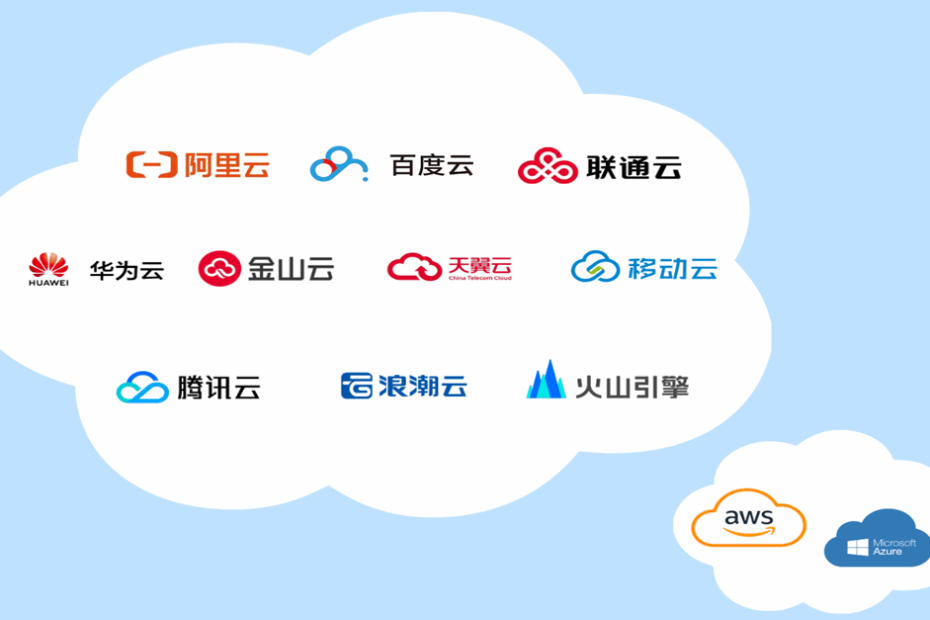
China’s cloud computing market continues to expand rapidly, driven by AI adoption, digital transformation, and growing demand for secure, compliant infrastructure. For foreign companies operating in or entering China, selecting the right cloud provider is a strategic decision that affects not only regulatory compliance, but also system performance and long-term scalability.
Understanding the local ecosystem, and how it differs from Europe or North America, is essential.
China’s Distinct Cloud Environment
China’s cloud landscape operates within a unique regulatory and technical framework. Businesses must consider:
- Data residency requirements under China’s Personal Information Protection Law (PIPL) and related cybersecurity regulations
- ICP licensing obligations for hosting websites and online platforms
- Cross-border data transfer restrictions
- Network performance variability across regions
Cloud deployment in China is therefore not simply a matter of choosing a global provider — it requires local infrastructure alignment and compliance validation from the outset.
Leading Cloud Providers in China (2025 Overview)
China’s market is dominated by domestic providers, each with specific strengths across industries and use cases:
Rank | Provider | Market | Strengths |
| 1 | Alibaba Cloud | 26.8% | Strong for retail, e-commerce, AI; best ecosystem for SaaS, POS, and omni-channel. |
| 2 | Huawei Cloud | 12.9% | Ideal for manufacturing, industrial IoT, government-aligned sectors; strong security posture. |
| 3 | China Telecom (eCloud) | 12.3% | Very stable networks; excellent for factories and distributed operations. |
| 4 | China Mobile (Mobile Cloud) | 9.4% | Strong for IoT, large field teams, mobile-first scenarios. |
| 5 | Tencent Cloud | 7.9% | Excellent for video, real-time communication, gaming, live streaming. |
| 6 | Baidu AI Cloud | – | Leading AI infrastructure; ideal for ML/AI-driven companies. |
| 7 | ByteDance Volcano Engine | – | Great for recommendation systems, short-video, media processing. |
| 8 | China Unicom (Unicom Cloud) | – | Strong in government and infrastructure-heavy industries. |
| 9 | Kingsoft Cloud | – | Broad enterprise feature set for common corporate workloads. |
| 10 | Inspur Cloud | – | Strong in public sector and industry-specific private cloud solutions. |
International hyperscalers such as AWS and Microsoft Azure operate in China through licensed local partners. While they provide continuity for global architectures, they are subject to local operational frameworks.
Main Challenges for Foreign Companies
Foreign enterprises often encounter several common challenges:
- Aligning global IT architecture with China’s regulatory requirements
- Ensuring reliable connectivity between China-based systems and global headquarters
- Avoiding compliance risks linked to improper data storage or transfers
- Managing latency and performance issues for local users
Without local expertise, cloud projects can experience delays, unexpected costs, or regulatory complications.
The Role of Local IT Partners
Given the complexity of China’s digital environment, many foreign companies choose to work with specialised local IT service providers that understand both international standards and Chinese compliance requirements.
JET IT Services is one such provider supporting foreign-invested enterprises across China. With experience in cloud deployment, infrastructure management, compliance advisory, and hybrid architecture design, JET IT Services helps businesses:
- Select appropriate cloud providers based on industry and operational needs
- Navigate ICP licensing and regulatory requirements
- Implement secure, compliant hosting environments
- Optimise performance through local infrastructure configuration
- Bridge China-based operations with global IT systems
Rather than positioning one cloud provider as universally superior, JET IT Services focuses on matching the right solution to each company’s strategic objectives.
This article was originally published by JET IT Services.